Nylon PA6 and PA66: differences, properties and applications in industrial moulding
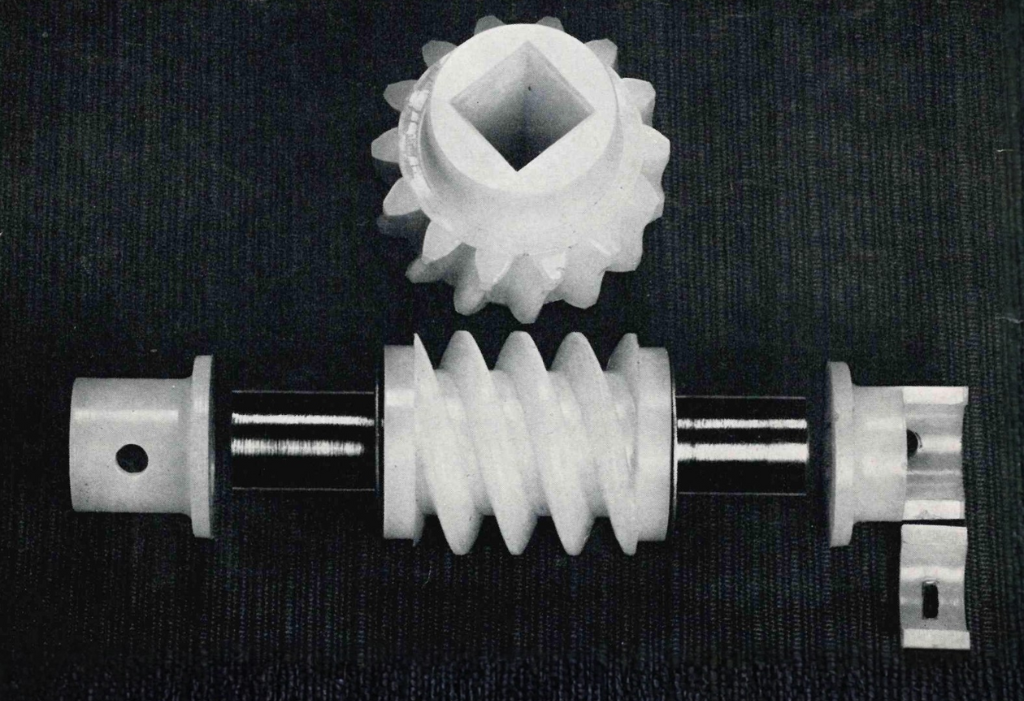
Nylon, part of the polyamide family, is one of the most versatile and widely used engineering polymers in industry. In particular, polyamide 6 (PA6) and polyamide 66 (PA66) are widely used in the injection moulding of plastic components thanks to their excellent combination of mechanical strength, light weight, dimensional stability and processability.
Although their names are similar, PA6 and PA66 have significant differences in structure and performance, which influence the choice of material for each application.
In this article we look in detail at their chemical composition, their mechanical, thermal and chemical properties, their behaviour with moisture, the use of reinforcements such as glass fibre, the optimal injection moulding parameters and the main fields of application, with a particular focus on our production, based on the experience of Corti Srl in technical moulding.
Nylon PA6 and PA66: structural differences and performance in industrial moulding
Chemically, nylon PA6 is obtained by ring-opening polymerisation of caprolactam, a cyclic monomer. Nylon PA66, on the other hand, is produced by polycondensation of two different monomers, hexamethylenediamine and adipic acid. This difference in synthesis gives PA66 a more regular and crystalline molecular structure, with more linear and compact hydrogen bonds.
The higher crystallinity of PA66 results in a higher melting point, 255–260 °C compared with 217–223 °C for PA6, lower shrinkage on cooling, and greater stiffness and wear resistance.
For these reasons, PA66 is often the best choice for applications where the component must withstand high temperatures and mechanical stress while remaining dimensionally stable.
PA6, on the other hand, thanks to its slightly less ordered structure, offers greater toughness and ductility. It absorbs impacts without breaking and is easier to process, as it requires lower processing temperatures.
It also tends to absorb more moisture than PA66, which can limit dimensional stability but in some cases improves the resilience of the material.
| Property | Nylon PA6 | Nylon PA66 |
|---|---|---|
| Molecular structure | Less crystalline, less ordered structure |
More crystalline, more regular and compact structure |
| Melting point | 217–223 °C | 255–260 °C |
| Stiffness | Lower | Higher |
| Wear resistance | Lower | Higher |
| Toughness and ductility | Higher | Lower |
| Moisture absorption | Higher | Lower |
Mechanical, thermal and chemical properties and behaviour with moisture
Mechanical properties
Both materials offer excellent mechanical performance, but nylon PA66 stands out for a slightly higher elastic modulus and breaking strength. This means that, with the same dimensions and geometry, a PA66 component will be stiffer and less likely to deform under static loads or prolonged stress.
Nylon PA6, with comparable tensile strength values, excels in impact resistance, which makes it better suited to components subject to vibration, impacts or dynamic loads.
For example, for a gear that has to withstand sudden shocks without chipping, PA6 can offer greater durability than PA66, unless the latter is modified with elastomeric additives.
In addition, PA6 has good self-lubricating properties, so it can be used in moving components without external lubricants. This combination of characteristics makes it particularly suitable for dynamic applications subject to wear.
| Property | Nylon PA6 | Nylon PA66 |
|---|---|---|
| Elastic modulus | Slightly lower | Slightly higher |
| Breaking strength | Slightly lower | Slightly higher |
| Tensile strength | Comparable to PA66 | Comparable to PA6 |
| Impact resistance | Higher | Lower |
| Self-lubrication | Higher (often no external lubrication needed) |
Lower |
Our tradition in nylon processing
As early as the 1970s, Corti Srl was using injection moulding to produce nylon components from the Akulon® family, such as gears and bushings for manual mechanisms in industrial applications such as lifting systems for roller shutters and awnings.
Akulon is a registered trademark of Envalior, whose roots go back to the historic Enka Glanzstoff Plastics N.V., a world leader in high-performance engineering polyamides.
These components have complex geometries and need no further machining, thanks to the precision achievable with moulding.

Thermal properties
Nylon PA66 can operate continuously up to 120–130 °C, while nylon PA6 is recommended for use up to about 100 °C. Above these thresholds, PA6 loses stiffness more quickly, which limits its use in high-temperature environments.
The service temperatures given refer to the materials in their standard form; adding additives or reinforcements, such as glass fibres or heat stabilisers, can extend or, in some cases, slightly reduce the recommended range.
PA6 is also slightly easier to process at low temperatures than PA66. This is a significant advantage, especially with complex moulds or to reduce cycle times.
| Property | Nylon PA6 | Nylon PA66 |
|---|---|---|
| Continuous service temperature | ~ 100 °C | 120–130 °C |
| Processing temperature | Lower | Higher |
Chemical resistance
PA6 and PA66 offer excellent resistance to oils, greases, fuels and many organic solvents, but are vulnerable to strong acids and particularly aggressive oxidising agents. Some concentrated alkalis can also degrade the molecular structure of polyamides, especially at high temperatures.
In general, chemical resistance depends strongly on the concentration and temperature of the chemicals: a dilute solution may not damage the material, while the same compound in concentrated form and at high temperature can accelerate its degradation.
Behaviour with moisture
Both are hygroscopic materials, meaning that they absorb moisture from the environment. However, nylon PA6 absorbs more water than nylon PA66: about 1.3% compared with 0.8% under standard conditions of 23 °C and 50% relative humidity. This can lead to larger dimensional changes and loss of stiffness over time, a critical factor for applications that require high dimensional precision and mechanical stability.
However, once saturated with moisture, PA6 can become tougher and less brittle, a characteristic that can be useful in dynamic applications where resilience matters more than dimensional precision.
These characteristics make both materials suitable for many industrial environments, including those exposed to high humidity and mildly aggressive chemicals, such as marine environments, where resistance to corrosion and moisture is essential.
| Property | Nylon PA6 | Nylon PA66 |
|---|---|---|
| Moisture absorption |
~ 1.3% (at 23 °C, 50% RH) |
~ 0.8% (at 23 °C, 50% RH) |
| Effect of moisture |
Greater toughness and less brittleness when saturated |
Smaller influence on mechanical properties |
Glass-fibre reinforced nylon PA6 and PA66: advantages and limits
Reinforcement with glass fibre is one of the most common ways to improve the performance of polyamides. Adding short fibres dispersed in the polymer matrix increases stiffness, elastic modulus and dimensional stability, and reduces shrinkage during moulding and moisture absorption. It also raises the continuous service temperature and wear resistance.
A typical example is PA66 GF30, with 30% glass fibre: this material combines the stiffness and thermal stability of PA66 with a significant reduction in shrinkage, making it ideal for structural components such as pump impellers or mechanical supports under constant load.
Reinforced PA6 is also widely used, especially when good impact resistance is to be maintained while improving stiffness and wear resistance.
However, glass fibre increases mould abrasion and can worsen the surface finish of the parts. Reinforced material also tends to be less tough than the unreinforced version.
Injection moulding of nylon PA6 and PA66: parameters and quality
Injection moulding is the main technique for turning nylon into finished components. To achieve optimal results, every stage of the process must be carefully monitored.
Nylon must be thoroughly dried before processing, because residual moisture can cause surface defects, internal bubbles and degradation of the polymer by hydrolysis. For PA6, 12–16 hours of drying at 80–90 °C are recommended, while for PA66 4–8 hours at the same temperatures are enough. These values are indicative and can vary depending on ambient conditions, the specific grade of material and the initial moisture level.
Processing temperature ranges from 230–260 °C for PA6 to 260–290 °C for PA66, while the moulds are kept at 80–90 °C to promote crystallisation of the polymer during cooling, improving the mechanical properties of the moulded part. Injection pressure is around 80–120 MPa, to ensure complete filling even with complex geometries.
As mentioned, PA6 can allow slightly shorter cycle times than PA66 thanks to its lower processing temperatures. However, its higher shrinkage requires strict control of cooling and careful mould design to prevent deformation and warping.
The moulding parameters given should be considered guidelines to be adapted to each component, according to geometry, wall thickness and type of mould.
Common defects in nylon moulding include silver streaks, caused by residual moisture, shrinkage and warping, due to uneven cooling, and flash, caused by excessive pressure or moulds that do not close perfectly. Careful adjustment of the parameters and good mould maintenance are essential to prevent these problems.
Applications of nylon PA6 and PA66 in the sectors served by Corti Srl
Thanks to their excellent properties, nylon PA6 and PA66 are highly reliable and versatile polymer solutions for many industrial sectors. They can be used both unreinforced and glass-fibre reinforced, which further broadens their range of applications and allows them to replace metals in many technical components, with advantages in terms of weight, cost and corrosion resistance.
The PA6 and PA66 solutions we produce are used in many industrial fields. Below are the main applications we develop for our customers, tailored to the technical requirements of each sector.
Marine industry: we produce boat accessories, structural components and fasteners, thanks to their resistance to marine corrosion and aggressive environments.
Mechanical industry: we produce gears, pulleys, cams, bearings and guides, using glass-fibre reinforced grades for light and strong components that can replace metal and reduce the need for lubrication.
Hydraulics: we use PA66 GF30 for pump impellers and fittings, thanks to its resistance to pressure, high temperatures and chemicals.
Furniture industry: we produce castors for office chairs, joints, supports and adjustable feet, taking advantage of the strength and smooth sliding of nylon. We also produce structural parts for bed, armchair and sofa frames.
Textile industry: we produce thread guides, gear wheels and wear parts that ensure durability and resistance to mechanical stress.
Nylon PA6 or PA66: how to choose for industrial moulding
The choice between nylon PA6 and PA66 depends on many factors related to the specific application. If the component has to operate at temperatures above 100 °C, PA66 is generally preferable because of its greater thermal stability. For applications subject to dynamic mechanical stress, such as impacts and vibrations, PA6 offers greater resilience.
When dimensional precision in humid environments is required, PA66 changes less thanks to its lower water absorption.
If, on the other hand, the aim is to reduce production costs, PA6 is the more economical solution, not only because the raw material costs less but also because of its lower processing temperatures and slightly faster production cycles.
In addition to the standard grades, there are special variants that offer targeted solutions for specific applications. For example, elastomer-modified PA66 (such as super-tough grades) improves impact resistance.
PA6/66 copolymers, on the other hand, combine the characteristics of both polyamides to achieve an optimal balance between stiffness, toughness and moisture absorption.
Conclusion
Nylon PA6 and PA66 are fundamental materials in industrial moulding. A thorough knowledge of these polyamides makes it possible to get the most out of their performance in each application.
With more than sixty years of experience, Corti Srl is the ideal partner to advise on, design and produce custom nylon components, ensuring precision, quality and reliability.
Contact us for more information.
Materials: PA 6 / PA 66