Materials
SEBS and SBS moulding: soft thermoplastic elastomer components
We injection-mould soft SEBS and SBS components to customer drawings: elastic, non-toxic thermoplastic elastomers, free from phthalates and latex, for parts in contact with skin or delicate surfaces.
What is SEBS?
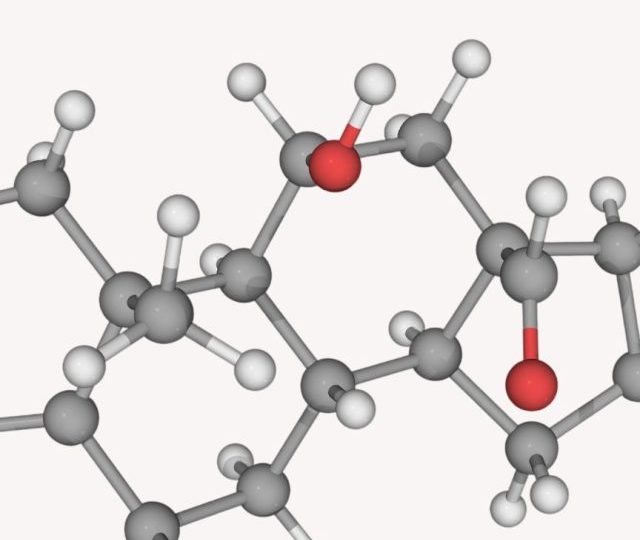
SBS and SEBS are styrenic block copolymers: rigid styrene blocks at the ends and an elastic central block, butadiene in SBS and ethylene-butylene in SEBS. SEBS is obtained by hydrogenating SBS: without the double bonds of butadiene it is far more resistant to oxygen, UV light, ozone and heat.
Hardness is set by the formulation over a very wide range, roughly from 10 Shore A to 60 Shore D. Oil-free formulations release no plasticisers: they leave no marks on surfaces and remain stable over time in contact with the body.
Properties of SEBS
- High elasticity
- Good resistance to weathering and ozone (SEBS)
- Softness
- Good adhesion to various substrates
Indicative continuous service temperatures for the most common grades: the exact value depends on the grade and formulation and should be checked on the data sheet of the chosen material.
What is SEBS used for?
- Seals and flexible components for medical and parapharmaceutical devices
- Grips and non-slip surfaces
- Cushioning elements for sports equipment
- Housings and seals for LED lamps
- Scratch-proof feet and supports
What we have made in SEBS
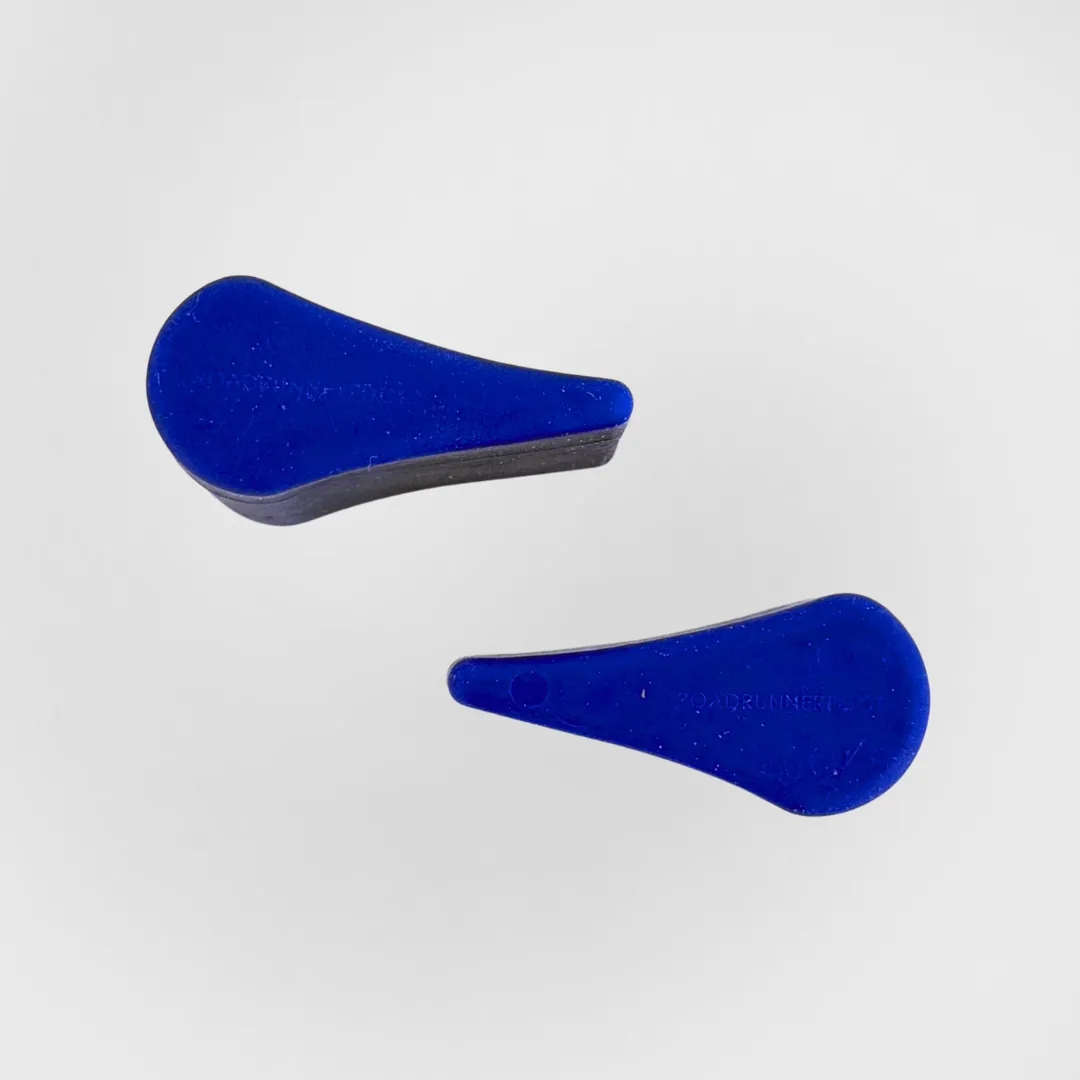
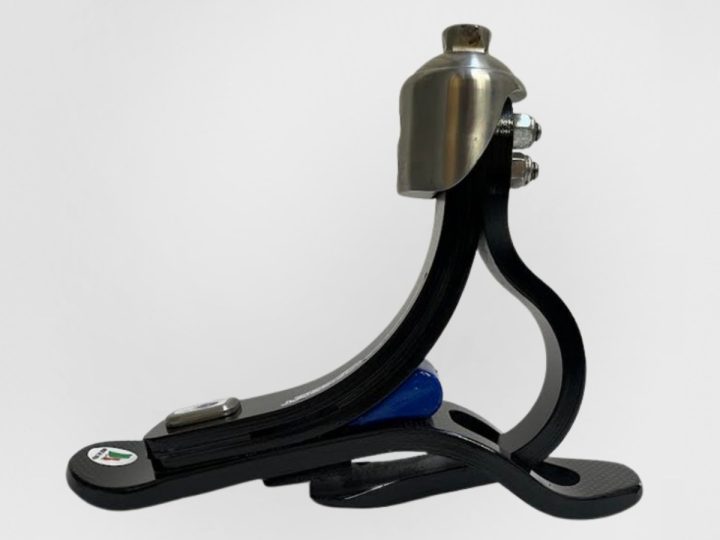
- Shock-absorbing wedges for the Roadrunnerfoot Engineering ROADWALKINGIIHP prosthetic foot, in soft and hard versions
- Oil-free furniture feet for parquet, carpets and light-coloured rugs
- SBS lamp bases
How we mould SEBS
The granules are dehumidified and injected at a controlled temperature, roughly between 160 and 220 °C, with cooling that avoids internal stresses. SEBS bonds well to PP and PE, so it lends itself to overmoulding onto rigid substrates.
SEBS or another material?
The material is chosen according to the conditions of use of the component. The closest alternatives:
-
TPU Thermoplastic polyurethane
TPU is more resistant to abrasion and oils; SEBS is softer, more stable in the cold and under UV, and easier to remelt.
-
PVC Phthalate-free polyvinyl chloride
Unlike flexible PVC it needs no plasticisers: this is why it is preferred for medical applications and contact with skin.
-
VMQ Silicone
Silicone withstands much higher temperatures but is vulcanised by compression; SEBS is injection-moulded, with shorter cycles.
Do you have a component to make in SEBS?
Send us your drawing or a sample: the contact form opens with the material already selected. If the material is still open, we will choose it together.
Materials
Other materials
- PSPolystyrene
- ABSAcrylonitrile butadiene styrene
- PEPolyethylene
- PPPolypropylene
- PCPolycarbonate
- PVCPhthalate-free polyvinyl chloride
- TPUThermoplastic polyurethane
- POMPolyoxymethylene
- PA 6 / PA 66Polyamide
- PEIPolyetherimide (e.g. ULTEM™)
- NRNatural rubber
- EPDMEthylene propylene diene rubber
- NBRNitrile rubber (acrylonitrile butadiene)
- VMQSilicone