
The landscape of materials science applied to orthopaedic medicine is undergoing a profound transformation, driven by the need to combine outstanding biomechanical performance with an increasingly high degree of device customisation.
In this context, SEBS has emerged as a key technical solution for manufacturing critical components in high-performance prosthetic foot systems.
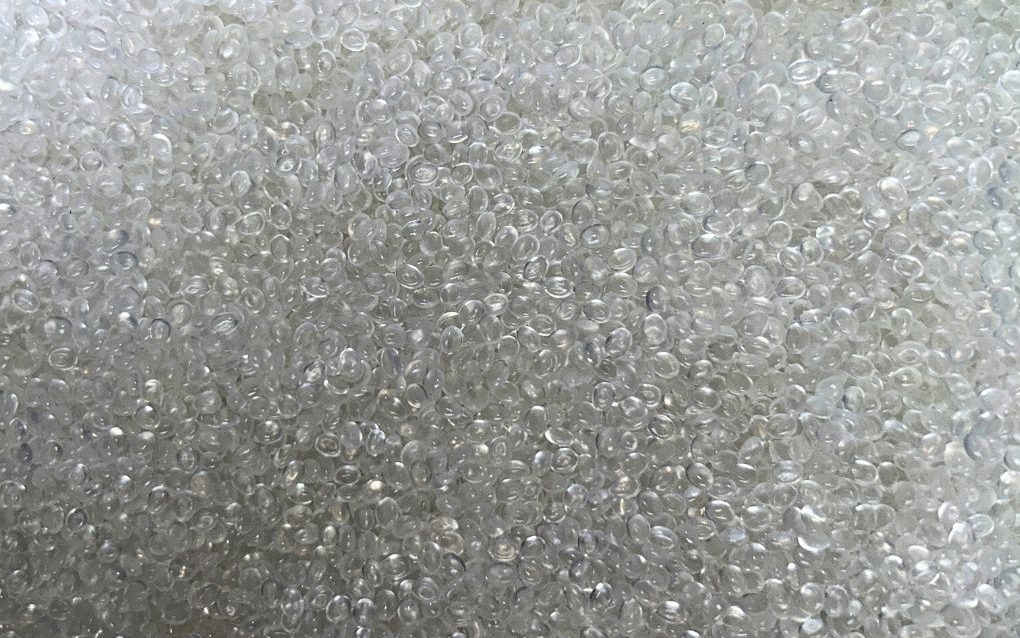
The acronym SEBS stands for Styrene-Ethylene-Butylene-Styrene, a thermoplastic elastomer belonging to the family of styrenic block copolymers.
Corti Srl manufactures the shock-absorbing prosthetic foot wedges used in the ROADWALKINGIIHP prosthetic foot, developed by Roadrunnerfoot Engineering, an Italian company specialising in advanced orthopaedic devices. Although small and almost invisible, this component has a decisive impact on gait quality for prosthesis users.
In this article, we examine this real-world application, exploring why SEBS is the ideal material for prosthetic foot wedges, how these components are produced through injection moulding, and what benefits they offer to the end user.
Why material selection matters in high-performance prosthetic feet
A prosthetic foot is not a static object. During the gait cycle, its components are subjected to thousands of cyclic loads, including compression at heel strike, torsion during the stance phase, and propulsive forces during push-off.
In this context, selecting the most suitable material for shock-absorbing components in a high-performance prosthetic foot is essential to ensuring reliable, stable and long-lasting mechanical performance.
SEBS as a prosthetic material: from chemistry to real-world performance
SEBS is a block thermoplastic elastomer (TPE-S). The styrene segments provide rigidity and mechanical strength, while the ethylene-butylene blocks provide elasticity and flexibility.
The result is a material that behaves like vulcanised rubber at room temperature while retaining the processability typical of thermoplastics—an essential advantage for injection moulding.
Each physical property of the material is designed to meet the specific requirements of orthopaedic applications, as illustrated in the table below.
| Property | Technical characteristic | Relevance to the prosthetic wedge |
|---|---|---|
| Block molecular structure | TPE-S copolymer (Styrene-Ethylene-Butylene-Styrene) | Optimal balance between stiffness and elastic rebound during gait |
| Variable Shore hardness | Soft-to-hard modulation through compound formulation | Calibration according to body weight |
| Low compression set | Minimal permanent deformation under repeated cyclic loads | Consistent elastic performance over time |
| Thermal stability (-50°C / +125°C) | Stable mechanical properties across a wide temperature range | Reliable performance in extreme conditions |
| Oil-free formulation | Absence of migrating plasticising oils | Stable adhesion to laminates and structural integrity |
| Biocompatibility | Free from PVC, latex and phthalates; compliant with ISO 13485 | No risk of allergic reactions; suitable for prolonged contact with the user |
These characteristics make SEBS a particularly suitable material for demanding environments such as the Milano Cortina 2026 Winter Paralympic Games, where low temperatures, high speeds and rapid changes in gradient place extreme demands on prosthetic components.
A comparison with traditional elastomeric materials further highlights the advantages of SEBS. PVC, for example, requires the addition of plasticisers to achieve the necessary flexibility. These often include phthalates, substances that may migrate over time to contact surfaces. Latex, while offering good initial elasticity, presents other limitations: in addition to the risk of allergic reactions, it tends to degrade more rapidly under cyclic mechanical stress.
Thanks to its molecular structure, SEBS ensures reliability, consistent performance and long-term safety in prosthetic applications.
In the following sections, we examine how modulating the hardness of SEBS makes it possible to optimise comfort, performance and user well-being in advanced prosthetic foot systems.
Comparison between SEBS, EVA and TPU: which material for a prosthetic wedge?
After analysing the advantages of SEBS over traditional materials, the following table compares its performance with that of two modern materials commonly used for shock-absorbing components: EVA (ethylene-vinyl acetate) and TPU (thermoplastic polyurethane).
| Feature | EVA | TPU | SEBS |
|---|---|---|---|
| Compression set | High-tends to collapse under cyclic loads | Low-good long-term resilience | Very low-constant elastic response |
| Thermal stability | Limited-reduced performance at low temperatures | Good but stiffens below 0°C | Excellent from -50°C to +125°C |
| Biocompatibility | Good but often contains chemical additives | Excellent | Excellent – oil-free and free of phthalates and latex |
| Hardness customisation | Limited | Good | High-soft/hard formulations available |
| Processability | Good | Good | Excellent for injection moulding |
| Suitability for sports prosthetics | Partial | Good but limited in cold climates | Optimal in all conditions |
SEBS proves to be a particularly well-balanced solution because it combines greater resilience than EVA with superior thermal stability compared with TPU.
From a manufacturing sustainability perspective, SEBS can also offer advantages. All three materials are thermoplastics and are therefore theoretically recyclable; however, in real applications the recovery of EVA and TPU may be more complex depending on the structure of the material and the manufacturing process. By contrast, SEBS is generally more suitable for remelting and reuse, helping to reduce production waste.
The prosthetic foot and the role of the SEBS wedge
The ROADWALKINGIIHP is a K4-level prosthetic foot designed for highly active users. The device combines four carbon-fibre laminates, produced using aerospace-derived autoclave cycles, with three ground contact points.
This unique configuration enables energy return efficiency of up to 70% in certain wedge configurations, placing it among the highest-performing devices in this category of prostheses.
Within this architecture, the SEBS shock-absorbing wedges produced by Corti Srl perform a crucial biomechanical function: they absorb impact during heel strike and return energy in a controlled manner during the propulsive phase.
The ability of SEBS to dissipate kinetic energy and gradually release it reduces stress on the user’s residual joints while maximising the elastic rebound of the carbon-fibre laminates.
Without a shock-absorbing wedge with appropriate mechanical properties, even the most advanced carbon laminate would not be able to perform to its full potential.
In this sense, the SEBS wedge acts as the interface between the user’s biomechanics and the device’s technology, transforming material performance into efficient, stable and natural movement.


Soft or hard wedge: customisation according to patient weight
One of the most innovative aspects of the prosthetic foot system is the availability of two SEBS wedge variants—a soft wedge and a hard wedge.
Wedge selection is calibrated according to the user’s body weight to ensure a consistent and optimal mechanical response regardless of body type.
| Characteristic | Soft wedge | Hard wedge |
|---|---|---|
| Typical user | Lower body weight | Higher body weight |
| Load response | Soft, progressive cushioning | Greater resistance to compression |
| Biomechanical function | Efficiently absorbs impact under lighter loads | Maintains gait stability by preventing excessive compression of the wedge |
| Energy return | Optimised to return energy under lighter loads | Maintains up to 70% efficiency even under higher loads |
| Clinical impact | Reduces joint stress and protects the lower back | Prevents gait asymmetries |
It is important to note that wedge customisation affects not only athletic performance. A prosthesis that does not correctly compensate for differences in body weight may lead to gait asymmetries, postural problems and chronic lower-back pain.
Optimising the carbon-fibre laminate–SEBS wedge system makes it possible to achieve a load–deflection curve that closely replicates the physiological function of the human foot–ankle complex, thereby protecting the sound limb from long-term degenerative overload.
How Corti Srl manufactures SEBS wedges: injection moulding
The SEBS wedges are manufactured through injection moulding. For this specific component, the production workflow includes:
- CAD modelling of the wedge geometry, optimised according to the force vectors of the gait cycle analysed by Roadrunnerfoot through Gait Analysis
- Material preparation, including dehumidification of SEBS granules, with parameters set to prevent structural defects
- Injection moulding at controlled temperatures between 160 °C and 220 °C, calibrated to ensure homogeneous material distribution
- Controlled cooling to prevent internal stresses and post-ejection deformation
- Manual finishing and final quality control, including verification of tolerances critical for gait biomechanics
Finally, Industry 4.0 monitoring systems continuously track process parameters, ensuring elastic uniformity, batch repeatability and optimal biomechanical performance. In an application that directly affects the user’s quality of life, this level of process control is an essential requirement.
🔗 Further reading: for a complete overview of our manufacturing activities, you can visit the page Discover all Corti Srl manufacturing processes
A use case that opens new scenarios: where the same approach can be applied
This project demonstrates how SEBS represents a practical engineering solution for applications that require long-term stability, absence of additive migration and a predictable mechanical response. Corti Srl processes SEBS across a wide range of sectors.
The oil-free formulation, for example, not only ensures adhesion between the prosthetic wedge and the carbon laminate; it is also used in the production of furniture feet designed for delicate surfaces, such as untreated parquet, carpets and light-coloured rugs. In these contexts, the absence of migrating plasticisers prevents the formation of marks, residues or stains over time—providing a level of protection that no additional surface treatment can guarantee.
Further applications include:
- Seals and flexible components for medical and para-pharmaceutical devices
- Shock-absorbing elements for professional sports equipment
- Grip and ergonomic components for surgical and rehabilitation instruments
- Anti-scratch furniture feet and supports for delicate flooring and untreated surfaces
- Protective coatings in automotive and electronics applications, where thermal stability is critical
To evaluate customised SEBS solutions, please contact us. Our technical team will support you in selecting and developing the solution best suited to your requirements.
Article prepared by Corti Srl Technical Department
FAQ
What is SEBS and why is it used in prosthetic feet?
SEBS is a biocompatible thermoplastic elastomer that maintains consistent elasticity and shape even after thousands of use cycles, making it ideal for shock-absorbing components in prosthetic feet. Its styrenic block structure ensures thermal stability from -50°C to +125°C and a complete absence of phthalates and latex. These properties are essential for devices that remain in prolonged contact with the body and must deliver reliable performance even in extreme climatic conditions.
What is the difference between a soft and a hard SEBS wedge?
The soft SEBS wedge is designed for lighter users, while the hard SEBS wedge is intended for heavier users. This is a technical rather than a subjective choice, as it directly affects joint health and gait quality over time. A wedge that is not properly matched to the patient’s body weight may cause chronic lower-back pain and joint problems if it is too soft, or gait asymmetries if it is too hard.
Why is SEBS better than EVA or TPU for a prosthetic wedge?
SEBS combines the advantages offered separately by EVA and TPU: greater resilience than EVA and higher thermal stability than TPU, with the additional possibility of hardness customisation according to the needs of the individual user. EVA tends to collapse under prolonged cyclic loads, while TPU stiffens at sub-zero temperatures. Thanks to its molecular structure, SEBS overcomes both of these limitations.
Is SEBS safe for applications in contact with the body?
Yes. SEBS is inherently biocompatible and free from PVC, latex and phthalates. In addition, the oil-free formulation used by Corti Srl eliminates the risk of plasticiser migration to surfaces in contact with the body, ensuring long-term chemical stability.
How does Corti Srl manufacture SEBS wedges?
Corti Srl manufactures SEBS wedges through injection moulding. The process begins with CAD modelling, followed by granule preparation and dehumidification, injection at controlled temperatures between 160°C and 220°C, and final quality control with millimetric tolerances. Each batch is monitored using Industry 4.0 systems to ensure repeatability, traceability and consistent quality.
Is SEBS used only in prosthetic applications
No. Thanks to its properties, SEBS is used in many other applications as well. Corti Srl, for example, uses it for oil-free furniture feet, where the absence of migrating plasticisers prevents marks on untreated parquet, carpets and light-coloured rugs. Other applications include medical seals, shock-absorbing components for sports equipment, and protective coatings in the automotive sector.


