Rubber compression moulding: vulcanisation and process parameters
Compression moulding of rubber is one of the main manufacturing technologies for producing vulcanised elastomeric components.
Vulcanisation is the central step of the process: it turns the rubber into a crosslinked material that is elastic, strong and durable, suitable for many industrial applications, including the most demanding ones.
Vulcanised rubber components are used in many industrial sectors, including manufacturing, furniture, hydraulics and marine.
How compression moulding works
The production of technical rubber articles by compression moulding is a thermochemical process in successive steps, which determine the final performance of the component.
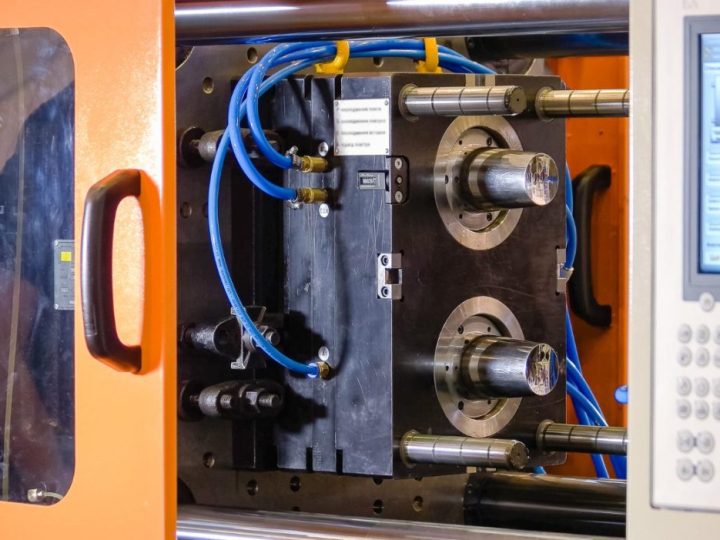
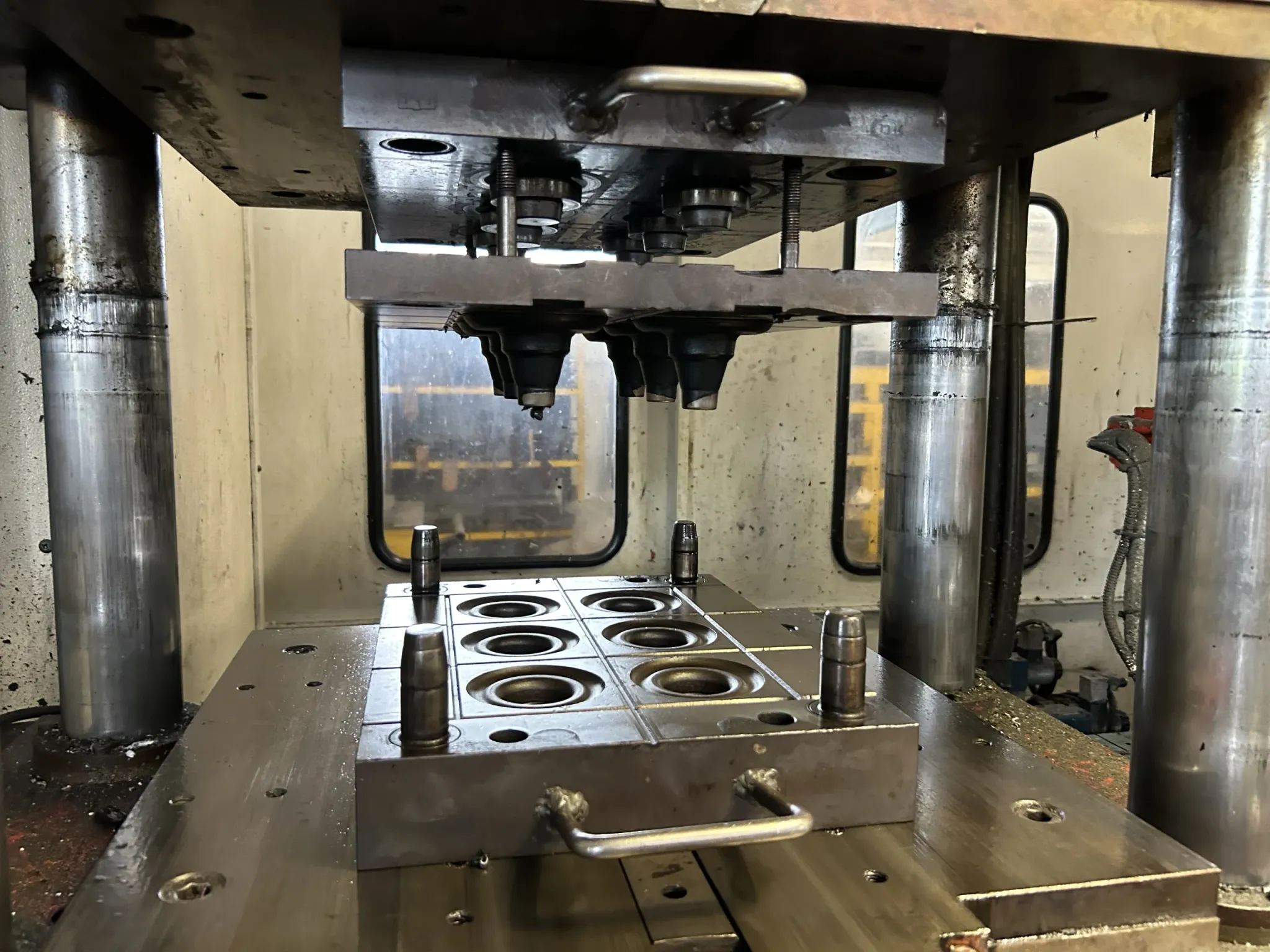
The process is carried out on a compression press.
1. Material preparation
Choosing the compound is a strategic step and depends on the operating conditions of the component, such as temperature, exposure to chemicals, mechanical stress and requirements for service life, hardness and thickness. Both natural and synthetic elastomers are used, such as natural rubber (NR), nitrile rubber (NBR), ethylene propylene diene rubber (EPDM) and silicone, suitably formulated by compounding. In this way the elastomer is combined with chemical additives that define the final properties of the material, including vulcanising agents, accelerators, activators and reinforcing fillers. The resulting mixture is called a compound. The compound is then cut and metered in predetermined quantities according to the volume of the cavity and the characteristics of the component.
2. Loading the mould
The rubber compound is placed in the mould. As the mould closes, the material is compressed and deforms until it completely fills the cavity, taking the geometry of the component.
For overmoulding on metal inserts, the inserts are positioned in the mould before it closes.
3. Vulcanisation
Once the mould cavity is filled, the compound reacts at the vulcanisation temperature, which triggers the chemical reaction. Vulcanisation time can range from 10 to 90 minutes, at a temperature between 140 °C and 170 °C.
4. Demoulding
At the end of the heating cycle, the rubber part is cooled, which is essential to stabilise the molecular structure and prevent thermal deformation after demoulding.
The role of vulcanisation: why crosslinking matters
Vulcanisation is the thermochemical process that permanently changes the molecular structure of rubber through the combined action of heat, sulphur and other specific additives.
During the process, crosslinking forms sulphur crosslinks between the polymer chains of the rubber, limiting their ability to slide past each other and creating a stable three-dimensional structure.
In this way, the sulphur bridges turn raw rubber into a crosslinked elastomer with higher performance, which can be used in many industrial contexts.
The vulcanising system
This crosslinked structure is made possible by the vulcanising system, the set of chemical components that control and enable the vulcanisation reaction.
The most widely used vulcanising agent is sulphur, because it is very effective at forming stable and elastic crosslinks.
In specific applications, such as silicone, peroxides can also be used; they trigger a different crosslinking mechanism that works at higher temperatures.
Accelerators are substances that speed up the vulcanisation reaction, reducing process times and energy consumption.
Activators, such as zinc oxide and other metal oxides, promote the formation of crosslinks, improving the strength and stability of the material.
| Components of the vulcanising system | Function |
|---|---|
| Vulcanising agents (sulphur, peroxides) | Formation of crosslinks |
| Accelerator | Shorter vulcanisation times |
| Activator | More efficient reaction |
Finally, reinforcing fillers are compound additives that do not take part directly in the vulcanisation reaction, but improve the mechanical properties and performance of the final material.
The right balance of these elements is essential to obtain components that meet the required specifications.
Why controlling vulcanisation parameters matters
Controlling the vulcanisation parameters, such as temperature, pressure and process time, is crucial.
Insufficient vulcanisation (under-curing) leads to incomplete crosslinking of the rubber: the material is too soft, with lower mechanical strength, elasticity and dimensional stability.
Conversely, excessive vulcanisation (over-curing) can make it stiffer and more brittle, reducing its durability.
The possible consequences in service include leaks, accelerated wear, permanent deformation or premature failure, with a direct impact on component reliability and on the operating continuity of the equipment.
Materials for compression moulding
The choice of elastomeric compound directly affects the final performance of the vulcanised component.
Choosing the material is not just about the type of rubber but about the whole formulation: performance depends on the right balance between elastomer, vulcanising system and functional additives.
The most suitable material is selected according to the operating conditions and the required performance. For example, applications exposed to high temperatures may require silicone compounds, while in the presence of oils and lubricants elastomers with greater chemical resistance, such as NBR, are often preferred.
| Elastomer | Main properties | Examples of industrial applications |
|---|---|---|
| NR | High elasticity, resilience and ability to absorb shocks and vibrations | Silent blocks, dampers, anti-vibration mounts, buffers, end stops and grommets |
| NBR | Resistance to oils, greases, hydrocarbons and wear | Technical seals, O-rings, hydraulic seals and components for environments with oils and lubricants |
| EPDM | Resistance to weathering (water, humidity, UV, ozone) | Components for outdoor use, such as end fittings for inflatable boats, grommets and seals for building services |
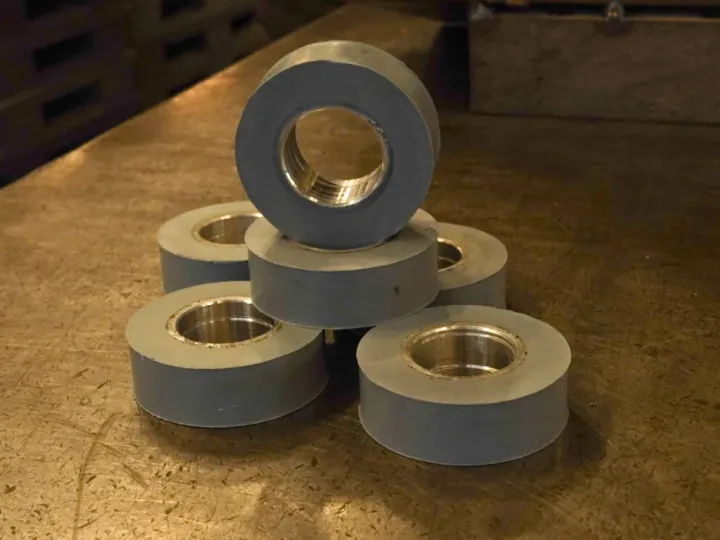
| Silicone | Thermal stability and good chemical inertness | Components exposed to high temperatures, such as technical seals and rubber-covered wheels |
Compression moulding therefore makes it possible to produce a wide range of technical rubber components for different industrial applications, including seals and other sealing system elements and rubber-to-metal components for vibration isolation.
These products are used in many industrial sectors where, depending on the operating conditions, they ensure hermetic sealing, vibration absorption and operational reliability of machines and equipment.
Advantages of vulcanised rubber components in industrial applications
Performance in industrial applications comes from the balance between compound formulation, crosslinking and control of the moulding process.
Reliability and consistent performance
The higher elasticity and resilience of vulcanised rubber make it possible to absorb deformations, impacts and vibrations, with a stable response even under dynamic loads and repeated stresses.
This consistency allows components to keep their functional characteristics over time and reduces wear, abrasion, loss of mechanical efficiency and failures in service. The result is greater operational reliability of the systems and applications in which these components are installed, with fewer breakdowns, malfunctions and machine stoppages due to deterioration.
Thermal stability and chemical resistance
Vulcanised rubber keeps its functional characteristics even under harsh operating conditions, such as temperature changes and humidity, and under prolonged exposure to aggressive chemicals such as oils, solvents and hydrocarbons.
The crosslinked structure helps to preserve the dimensional stability of the part and to limit deformation, swelling and changes in mechanical properties.
In this way the service life of the components increases significantly, while the need for maintenance decreases.
Resistance to ageing and weathering
Over time, the material can age as a result of exposure to weathering agents such as oxygen, ozone and ultraviolet radiation.
These factors can trigger oxidation and progressive degradation of the polymer structure, causing the material to stiffen, lose elasticity and develop surface cracks.
The crosslinked structure of the rubber slows down these processes, improving the durability of the component and the long-term stability of its performance.
This characteristic is essential for outdoor applications or continuous operation.
Sustainability and material recovery
Although the crosslinked structure of vulcanised rubber does not allow the material to be remelted and reprocessed as thermoplastics can, there are technologies for recovering and reusing production scrap and end-of-life components.
This reduces waste and supports the circularity of production processes.
The table below shows the effect of vulcanisation on the properties of the material and on the performance of the component.
| Property | Effect of vulcanisation | Industrial impact |
|---|---|---|
| Elasticity and recovery from deformation | Reduces permanent deformation | Performance maintained under cyclic loads and repeated deformation |
| Mechanical strength | Increases the ability to withstand stress and wear | Longer service life and stable performance over time |
| Thermal stability | Keeps its properties even at high temperatures | Suitable for high-temperature environments (for example engines or industrial plants) |
| Chemical resistance | Reduces attack by oils, solvents and other aggressive agents | Suitable for chemically aggressive environments |
| Resistance to ageing and weathering | Slows down degradation caused by oxygen, ozone and UV rays | Less degradation in service and longer service life |
Impact on OEE and TCO
In industry, the benefits of elastomeric components are also reflected in the overall efficiency of the machines and plants in which they are used and in their costs over the life cycle.
Longer service life, reliability and less need for maintenance help to improve performance indicators such as OEE (Overall Equipment Effectiveness) and TCO (Total Cost of Ownership).
| Property | Business benefit | Impact on OEE | Impact on TCO |
|---|---|---|---|
| Elasticity and resilience | Longer service life | Availability: longer mean time between failures (MTBF) | Lower replacement costs |
| Stable crosslinks and mechanical strength | Fewer machine stoppages | Availability and performance: fewer unplanned stoppages and production slowdowns | Lower downtime costs |
| Dimensional stability and rubber-to-metal bonding | Higher quality and operational stability | Quality: fewer rejects and non-conforming components | Lower scrap and rework costs |
| Resistance to heat, chemicals and deterioration | Greater operational reliability | Availability and performance: operating continuity even in harsh conditions | Lower extraordinary maintenance costs |
Limits and design considerations
Despite its many advantages, vulcanised rubber has some aspects that must be considered at the design stage.
At very low temperatures, some elastomers can lose part of their elasticity, increasing the risk of stiffening and brittleness, with possible effects on performance in applications exposed to extreme environmental conditions.
Choosing the most suitable compound optimises the behaviour of the component and ensures the required performance in the specific operating conditions.
In addition, once vulcanisation is complete, the crosslinked structure does not allow the material to be remelted or reshaped, unlike thermoplastics. This is why controlling the process parameters is essential to ensure that the component conforms and achieves the required properties.
Why choose Corti Srl for compression moulding with vulcanisation
Choosing a manufacturing partner with specific expertise in formulating and processing elastomers is decisive for obtaining components that are reliable, durable and meet the required performance.
Thanks to our experience and in-depth knowledge of elastomeric materials and vulcanisation processes, choosing Corti Srl does not simply mean buying a component, but working with a technical partner who supports the customer at every stage of the project.
From defining the application requirements to choosing the compound, from designing the mould in our in-house workshop to defining the vulcanisation parameters, we work alongside designers and technical departments to improve the overall efficiency of systems, reduce maintenance costs and prevent problems during assembly and in service.
For further information or help in choosing the solution best suited to your needs, please contact us.
FAQ
How does compression moulding work?
Compression moulding is a forming process for elastomers in which the rubber compound is placed in a closed mould and subjected to pressure and temperature. Under these conditions the material flows and completely fills the cavity, taking the geometry of the component. During the cycle, vulcanisation takes place, turning the raw rubber into an elastic, strong and durable elastomeric material.
What is rubber vulcanisation?
Vulcanisation is a thermochemical process that permanently changes the structure of rubber by forming sulphur crosslinks between the polymer chains, turning it into a crosslinked structure.
Why is it important to control the vulcanisation parameters?
Controlling temperature, pressure and vulcanisation time is essential to obtain the final properties of the component. Incorrect parameters can cause insufficient vulcanisation (under-curing), with a material that is too soft and less resistant, or excessive vulcanisation (over-curing), with stiffening and reduced durability.
Which elastomers are most used in compression moulding?
The main materials used in compression moulding are technical elastomers selected according to the operating conditions of the component. They include natural rubber (NR), nitrile rubber (NBR), ethylene propylene diene rubber (EPDM) and silicone. The choice of compound depends on factors such as resistance to oils and greases, exposure to weathering, thermal stability and the service life required of the final component.
What are the advantages of vulcanisation?
Vulcanisation improves the performance of rubber by increasing its elasticity, dimensional stability and resistance to mechanical, chemical and thermal stress. This extends the service life of the component, reducing failures, machine stoppages and maintenance, and improves the reliability and efficiency of industrial systems.
What does Corti Srl make with rubber vulcanisation?
Corti Srl produces a wide range of elastomeric components for various industrial sectors, with specific functional properties for each application. They include industrial seals, rubber-to-metal components and made-to-drawing technical articles, designed for the specific operating conditions.
Materials: NR