
Materials
Silicone moulding: silicone rubber components to drawing
We compression-mould silicone components to customer drawings, including parts with metal inserts: a rubber that withstands extreme temperatures, UV light and ozone, and is non-toxic and biocompatible.
What is silicone?
Silicone (VMQ, methyl vinyl silicone rubber) has a backbone of silicon and oxygen atoms instead of carbon. This structure gives it exceptional thermal stability: it stays elastic from severe cold to high temperatures, where other rubbers harden or degrade.
It resists ozone, UV light and ageing, is water-repellent and an excellent electrical insulator and, in dedicated formulations, suitable for food contact and medical use. Its tear and abrasion resistance is lower than that of other rubbers, which is taken into account in the part design.
When a fluoroelastomer (FKM) is chosen mainly for high-temperature resistance, silicone can be a PFAS-free alternative.
Properties of silicone
- High resistance to high temperatures
- Good resistance to low temperatures
- Excellent weather resistance
- Outstanding resistance to UV rays and ozone
- Good elasticity
- Non-toxic and biocompatible
Indicative continuous service temperatures for the most common grades: the exact value depends on the grade and formulation and should be checked on the data sheet of the chosen material.
What is silicone used for?
- High-temperature seals
- Components for medical and parapharmaceutical devices
- Food-contact parts
- Insulators and protection for electrical components
- Rubber-tyred wheels and technical components exposed to heat
What we have made in silicone
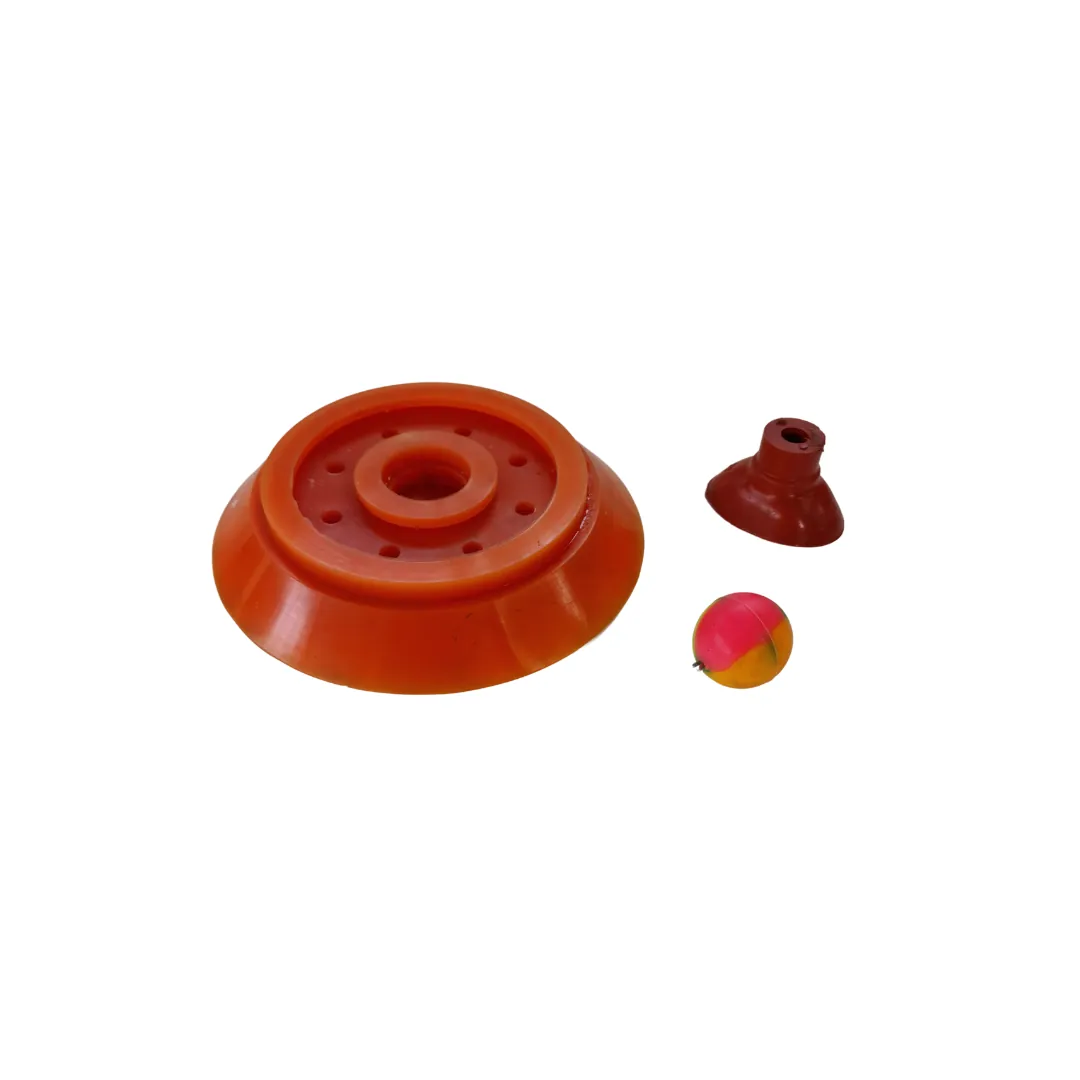
- Suction cups
- Seals
- Buttons for capitonné armchairs and sofas
- Silicone rubber components with metal inserts
- Parts for medical and food use, in certified silicone
How we mould silicone
Silicone is compression-moulded: the compound is vulcanised in the heated mould, usually with peroxides. It can also be vulcanised onto metal inserts.
Silicone or another material?
The material is chosen according to the conditions of use of the component. The closest alternatives:
-
EPDM Ethylene propylene diene rubber
EPDM costs less and performs well outdoors and with steam, but withstands lower temperatures.
-
SBS / SEBS Styrenic thermoplastic elastomers (TPS)
For soft parts in contact with skin that are not exposed to heat, SEBS is injection-moulded with shorter cycles.
-
NBR Nitrile rubber (acrylonitrile butadiene)
In contact with mineral oils and fuels, nitrile rubber (NBR) is more suitable.
Further reading
Do you have a component to make in silicone?
Send us your drawing or a sample: the contact form opens with the material already selected. If the material is still open, we will choose it together.
Materials
Other materials
- PSPolystyrene
- ABSAcrylonitrile butadiene styrene
- PEPolyethylene
- PPPolypropylene
- PCPolycarbonate
- PVCPhthalate-free polyvinyl chloride
- TPUThermoplastic polyurethane
- SBS / SEBSStyrenic thermoplastic elastomers (TPS)
- POMPolyoxymethylene
- PA 6 / PA 66Polyamide
- PEIPolyetherimide (e.g. ULTEM™)
- NRNatural rubber
- EPDMEthylene propylene diene rubber
- NBRNitrile rubber (acrylonitrile butadiene)