Materials
TPU moulding: thermoplastic polyurethane components
We injection-mould TPU components to customer drawings: an elastic thermoplastic elastomer with outstanding abrasion resistance, processed like a plastic and performing like a rubber.
What is TPU?
Thermoplastic polyurethane (TPU) is a thermoplastic elastomer made of soft segments, which provide elasticity and the ability to absorb shocks and vibration, and hard segments, which provide mechanical strength and dimensional stability. When heated the hard segments soften and the material can be moulded; on cooling it recovers its properties.
By changing the formulation, hardness ranges from about 60 Shore A to 80 Shore D: the same material can give soft parts and almost rigid ones. It resists abrasion far better than natural rubber, tolerates oils, greases and fuels and, as it is not vulcanised, scrap can be remelted.
Properties of TPU
- High elasticity
- Good abrasion resistance
- Resistant to oils and solvents
- Transparent
Indicative continuous service temperatures for the most common grades: the exact value depends on the grade and formulation and should be checked on the data sheet of the chosen material.
What is TPU used for?
- Impact-absorbing feet and seat inserts
- Seals and sealing rings
- Anti-vibration dampers
- Wear-resistant wheels and linings
- Cable grommets and harness protection
What we have made in TPU
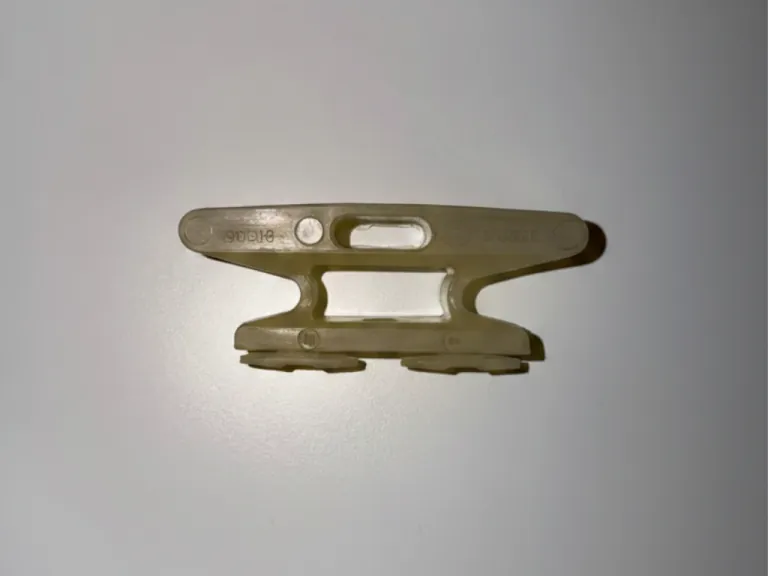
- Slat holders for orthopaedic slatted bed bases
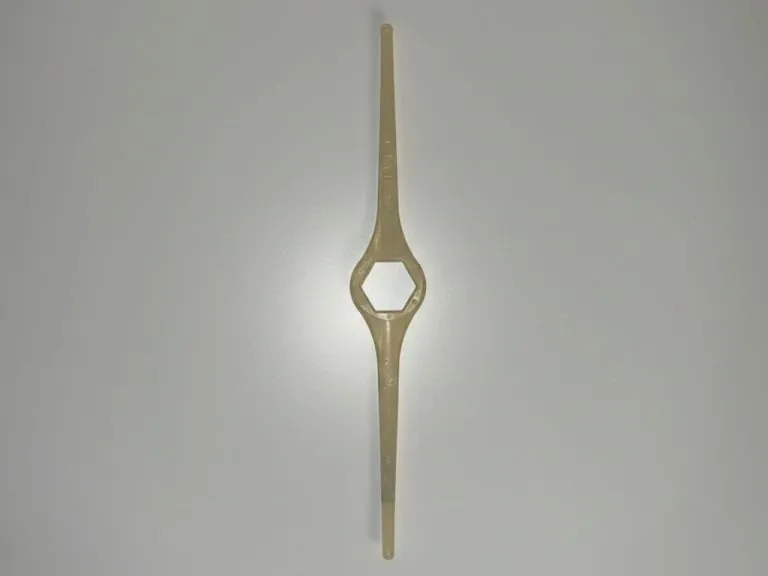
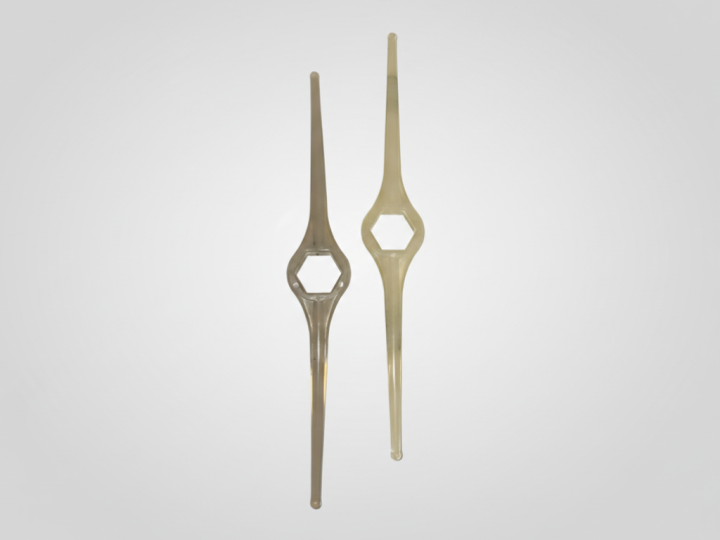
- Components for olive harvesting systems
How we mould TPU
TPU is hygroscopic: the granules are dried before injection moulding. It can also be overmoulded onto rigid plastic or metal inserts to produce a single component.
TPU or another material?
The material is chosen according to the conditions of use of the component. The closest alternatives:
-
SBS / SEBS Styrenic thermoplastic elastomers (TPS)
SEBS is softer, copes better with UV and low temperatures and is preferred in contact with skin; TPU is more resistant to abrasion, oils and tearing.
-
NR Natural rubber
Vulcanised natural rubber has excellent resilience and is the classic choice for rubber-to-metal mounts; it is less resistant to abrasion and oils and cannot be remelted.
-
PVC Phthalate-free polyvinyl chloride
Unlike flexible PVC it contains no plasticisers and lasts longer under friction and repeated stress.
Further reading
Do you have a component to make in TPU?
Send us your drawing or a sample: the contact form opens with the material already selected. If the material is still open, we will choose it together.
Materials
Other materials
- PSPolystyrene
- ABSAcrylonitrile butadiene styrene
- PEPolyethylene
- PPPolypropylene
- PCPolycarbonate
- PVCPhthalate-free polyvinyl chloride
- SBS / SEBSStyrenic thermoplastic elastomers (TPS)
- POMPolyoxymethylene
- PA 6 / PA 66Polyamide
- PEIPolyetherimide (e.g. ULTEM™)
- NRNatural rubber
- EPDMEthylene propylene diene rubber
- NBRNitrile rubber (acrylonitrile butadiene)
- VMQSilicone